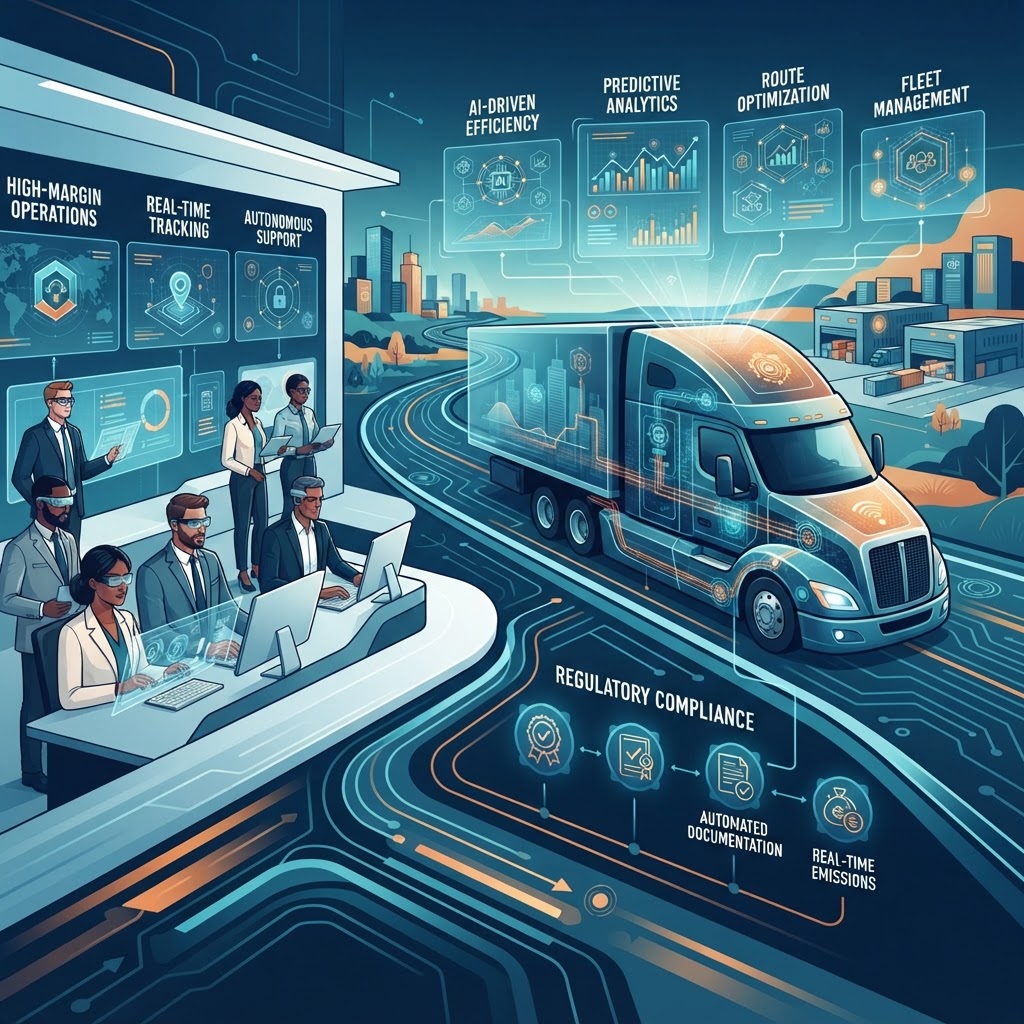
The 2026 trucking landscape has shifted from a market of volume to a market of operational precision. The traditional "buy a truck and find a load" model is obsolete. Today’s most profitable startup fleets—those scaling from zero to ten trucks within 18 months—operate as tech-enabled firms that happen to own physical assets. The barrier to entry is no longer just capital; it is your ability to integrate financial liquidity with automated dispatch.
2026 Trucking Startup Cost Calculator
Estimated out-of-pocket costs for a single-truck startup.
| Category | Cost Range (USD) | | :--- | :--- | | Licensing, Authority, & Insurance (Down Payment) | $12,000 – $22,000 | | Initial Equipment Outlay (Used/Lease Deposit) | $25,000 – $65,000 | | Operating Capital (First 90 Days) | $15,000 – $30,000 | | Technology Stack (TMS, ELD, Factoring Setup) | $2,500 – $5,000 | | Total Startup Requirement | $54,500 – $122,000 |
[Insert Infographic: "Startup Capital Allocation Breakdown: From Authority to First Load"]
Phase 1: Capital Allocation and Unit Economics
<div itemscope itemtype="https://schema.org/HowToStep"> <meta itemprop="name" content="Phase 1: Financial Planning"> Profitability is decided before you sign a lease. Successful carriers treat their cost-per-mile as a dynamic variable that shifts based on detention time and fuel surcharges. Relying on industry averages is a common trap; use the <a href="/products/directx-command-center">DirectX Command Center</a> to ingest your actual overhead, insurance premiums, and maintenance intervals to calculate your true break-even point. If you aren't tracking your cost-per-mile to four decimal places, you aren't managing a fleet—you're subsidizing the shippers. </div>[Insert UI Screenshot: DirectX Command Center Dashboard showing real-time cost-per-mile analytics]
Phase 2: Building the Operational Core
<div itemscope itemtype="https://schema.org/HowToStep"> <meta itemprop="name" content="Phase 2: Tech Stack Integration"> Fragmented systems are the primary driver of profit erosion in new fleets. When dispatch, accounting, and documentation exist in siloes, you lose at least 15 hours of productivity per week to manual data entry. Implementing a unified platform like <a href="/products/loadmii">Loadmii</a> creates a closed-loop system where a booked load automatically generates the invoice and triggers the dispatch notification. This is the automation of your cash cycle. </div>Phase 3: Navigating the Regulatory Landscape
<div itemscope itemtype="https://schema.org/HowToStep"> <meta itemprop="name" content="Phase 3: Regulatory Compliance"> The 2026 regulatory environment, including the Broker Financial Responsibility Rule and mid-year ELD decertification cycles, punishes fleets that rely on manual record-keeping. Compliance must be proactive. By using <a href="/products/directx-clientos">DirectX ClientOS</a>, you maintain a digital audit trail of every interaction, load document, and inspection report. If your compliance process is reactive, you will lose significant billable time to administrative downtime during inspections. </div>Phase 4: Operational Velocity and Liquidity
<div itemscope itemtype="https://schema.org/HowToStep"> <meta itemprop="name" content="Phase 4: Cash Flow Management"> Standard 30-45 day pay cycles have crippled more startups than equipment failures. Relying on traditional bank terms for freight billing will stifle growth during your first two years. <a href="/products/directx-factoring-os">DirectX Factoring OS</a> integrates directly into your TMS, allowing for the immediate conversion of freight bills into operating capital. This liquidity enables you to pivot into high-margin specialized freight lanes without waiting for invoices to clear. </div>Phase 5: AI-Driven Freight Procurement
<div itemscope itemtype="https://schema.org/HowToStep"> <meta itemprop="name" content="Phase 5: Freight Acquisition"> Stop chasing low-margin spot market volume. Use <a href="/products/leadcommand-ai">LeadCommand AI</a> to identify and qualify leads, then leverage <a href="/products/directbook-ai">DirectBook AI</a> to schedule freight based on your specific fleet profile and historical lane performance. By analyzing equipment utilization rates through the DirectX ecosystem, you can prioritize loads that improve your empty-mile ratio. Move from a dispatcher hunting for loads to an operational strategist deploying assets where the data confirms the highest ROI.<a href="/products/loadmii">Explore the Loadmii Platform: Automate your back office today.</a>
</div>Related Reading
-
The 2026 Trucking Startup Blueprint: Building on an AI-Na...
-
The 2026 Trucking Startup Blueprint: Launching with AI-Na...
-
The AI-Native Blueprint: Starting a High-Performance Truc...
-
The 2026 Trucking Startup Financial Stack: Integrating Fa...
-
Building Your 2026 Trucking Startup Financial Stack: A Gu...
-
The 2026 Loadmii™ Playbook: Scaling Your Trucking Busines...
-
The 2026 Trucking Startup Playbook: Scaling Your Fleet wi...
-
The 2026 Carrier Launchpad: Building an AI-Native Truckin...
-
The 2026 Carrier Launchpad: Building an AI-Native Truckin...
-
The 2026 Trucking Startup Blueprint: Building a Scalable ...
-
The 2026 Freight Fraud Defense Manual: Neutralizing Doubl...
-
The 2026 Freight Fraud Defense Manual: Neutralizing Doubl...
-
The 2026 Trucking Startup Blueprint: Building an AI-Nativ...
-
The 2026 Trucking Operations Hub: Scaling AI-Native Carri...
-
The 2026 AI-Native Carrier: Building Infrastructure for S...
-
The 2026 Carrier Cash Flow Manual: Mastering Automated Se...
-
The 2026 Carrier Cash Flow Manual: Automating Factoring a...
-
The 2026 Trucking Operations Hub: Moving Beyond Systems o...
-
The 2026 Trucking Operations Hub: Scaling Efficiency with...
-
Eliminating the 30-Day Pay Gap: The Carrier's Guide to In...
-
Solving the 30-Day Pay Gap: A Guide to Integrated Freight...
-
The AI-Native Carrier Hub: A Tactical Roadmap for Startin...
-
Starting a Trucking Company in 2026: The AI-Native Operat...
-
The 2026 Trucking Startup Blueprint: Building an AI-Nativ...
-
The 2026 Trucking Startup Blueprint: Launching an AI-Nati...
-
The 2026 Trucking Startup Blueprint: Building an AI-Nativ...
-
How to Start a Trucking Company in 2026: The Tech-First B...
-
The 2026 Trucking Startup Blueprint: Building a Tech-Firs...
-
The 2026 Trucking Startup Blueprint: Building an AI-Power...
-
The 2026 Trucking Startup Blueprint: Scaling Fleet Author...
-
The AI-Native Carrier: A Blueprint for Profitable Truckin...
-
The AI-Native Carrier: A Blueprint for Launching a High-M...
-
The 2026 Trucking Startup Blueprint: Building a Tech-Firs...
-
The 2026 Trucking Startup Blueprint: Building a Tech-Firs...
-
Legacy to Lead: A Phased Implementation Guide for AI-Nati...
-
Legacy to Lead: A Blueprint for Implementing AI-Native Fr...
-
The Digital Carrier Roadmap: Building an AI-Native Trucki...
-
The Digital Carrier Roadmap: Building an AI-Native Trucki...
-
The 2024 Guide to Modern Freight Brokerage Management: Sc...
-
The Modern Freight Brokerage Management Guide: Protecting...
-
The 2026 Freight Brokerage Technology Stack: Building for...
-
The 2026 Freight Brokerage Technology Stack: A Roadmap to...
-
The 2026 Freight Brokerage Playbook: Scaling Revenue With...
-
The 2026 Freight Brokerage Playbook: Scaling with AI-Nati...
-
The 2026 AI-Native Trucking Startup Guide: Building for P...
-
The 2026 AI-Native Trucking Startup Guide: Building for P...
-
Modern Trucking Operations: A Guide to Scaling with AI-Na...
-
The 2026 Guide to AI-Native Trucking Operations: Scaling ...
-
The 2026 Trucking Operations Command Center: A Strategic ...
-
The 2026 Trucking Operations Command Center: Moving Beyon...
-
The Unified Trucking Operations Command Center: Solving t...
-
The Unified Trucking Operations Command Center: Solving t...
-
The Zero-Touch Brokerage: A Roadmap to Scaling Freight Op...
-
The Zero-Touch Brokerage: Scaling Freight Operations via ...
-
The 2026 Trucking Startup Blueprint: Building an AI-Nativ...
-
The 2026 Trucking Startup Blueprint: Building an AI-Nativ...
-
The 2024 Freight Brokerage Operations Manual: Building an...
-
The Ultimate Freight Brokerage Operations Manual: Scaling...
-
2026 Trucking Startup Blueprint: Scaling a Profitable Fle...
-
The Trucking Startup & Scale-Up Command Center: A 2026 Fl...
-
The Freight Brokerage Operating System: Why Operational C...
-
The Freight Brokerage Operating System: Scaling Beyond Fr...
-
The 2026 Trucking Startup Blueprint: Scaling from Owner-O...
-
The 2026 Trucking Startup Blueprint: From Authority to Op...
-
The 2026 Trucking Startup Playbook: Building a Tech-First...
-
The 2026 Trucking Startup Playbook: Building a Scalable T...
-
The Digital Freight Brokerage Handbook: Scaling Operation...
-
The Digital Freight Brokerage Handbook: Scaling Operation...
-
Starting a Trucking Company in 2026: The Digital-First Bl...
-
Starting a Trucking Company in 2026: The Digital-First Bl...
-
Starting and Scaling a Trucking Company in 2026: The AI-P...
-
The AI-Native Freight Brokerage: A Strategic Roadmap to S...
-
The 2026 Trucking Startup Blueprint: Building a Digitally...
-
The 2026 Trucking Startup Blueprint: From DOT Authority t...
-
Capitalizing on the $5.5 Billion Infrastructure Surge: A ...
-
[The ## Related Reading
-
Automating Freight Cash Flow: A Guide to Integrated Facto...
-
The High-Velocity Logistics Lead Blueprint: Automating Qu... 0 Million Cargo Theft Takedown: Forensic Analysis o...](/insights/cargo-theft-ring-indictment-logistics-fraud-analysis)
-
The $104 Million Wake-Up Call: Operational Lessons from a...
Frequently Asked Questions
How much capital do I need to start a trucking company in 2026?
Startup capital requirements typically range between $54,500 and $122,000, covering licensing, insurance deposits, initial equipment, and 90 days of operating capital.
Why is a tech stack essential for new trucking companies?
Fragmented manual systems cause significant productivity loss. A unified platform automates your cash cycle, dispatch, and compliance, allowing you to focus on fleet growth rather than manual data entry.
How can AI help with freight procurement for new fleets?
AI-driven procurement tools analyze market trends and lane profitability in real-time, helping you book high-margin freight instead of relying on low-paying spot market loads.
What is the biggest risk for new trucking startups?
Cash flow stagnation and inefficient cost-per-mile tracking are the leading causes of failure. Managing liquidity through automated factoring and tracking true overhead is critical for survival.